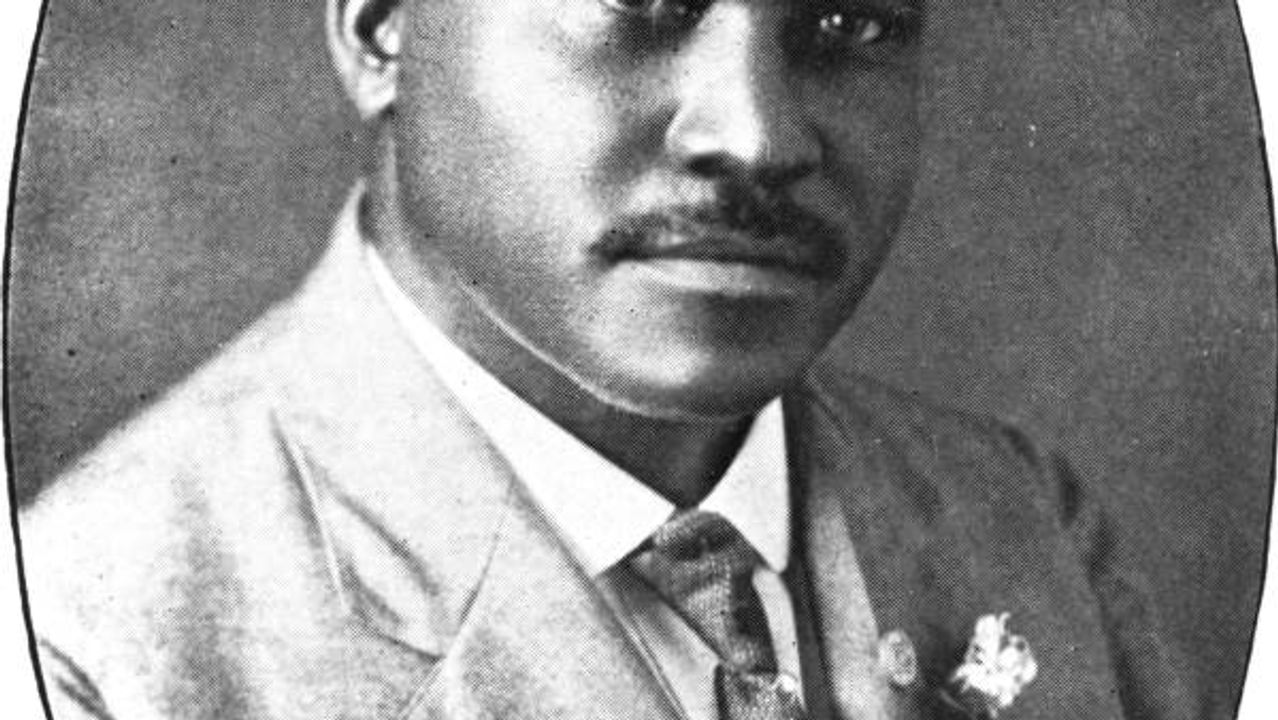
Abraham Lincoln Lewis
Insurance executive, co-founder of the Afro-American Life Insurance Company, and founder of American Beach
Photo: Unknown / State Archives of Florida, Florida Memory (c. 1919) / Public Domain

Why This Person Is Included
Abraham Lincoln Lewis co-founded the Afro-American Life Insurance Company in Jacksonville, Florida, in 1901, growing it into one of the largest Black-owned financial institutions in the South. He then purchased land on Amelia Island and created American Beach — a resort community where Black families could vacation without encountering the exclusions and humiliations of Jim Crow. Lewis is an example of vertical integration applied to civil rights: he built the financial institution, then used its capital to build the physical infrastructure that his community needed and that the segregated market refused to provide.
Historical Significance
Lewis represents the generation of Black entrepreneurs who understood that financial institutions and physical infrastructure were inseparable. An insurance company accumulates capital; that capital can be deployed into land; that land can become a community asset. American Beach was not just a resort — it was proof that Black capital could build Black space. The beach still exists. Lewis's name is less remembered than the institution he left behind.
The Story
Abraham Lincoln Lewis was born in Jacksonville, Florida, in 1865 — the year the Civil War ended and the Thirteenth Amendment was ratified, and named for the president who signed the Emancipation Proclamation. He grew up in Reconstruction-era Florida and came of age during the consolidation of Jim Crow, building a business career in the window between Reconstruction's brief promise and the full installation of legal segregation.
In 1901, Lewis co-founded the Afro-American Life Insurance Company in Jacksonville. The insurance industry was one of the few sectors where Black entrepreneurs could build large institutions during the Jim Crow era: the white insurance companies refused to cover Black lives at standard rates (when they covered them at all), creating a captive market for Black-owned insurers. Lewis built Afro-American Life into one of the largest Black-owned financial institutions in the South over the following decades.
American Beach
In 1935, Lewis purchased land on Amelia Island, Florida, and established American Beach — a resort community specifically designed for Black vacationers who were excluded from Florida's white beaches. American Beach offered hotels, restaurants, entertainment, and the experience of coastal leisure that segregation denied Black families everywhere else in Florida. At its peak, it drew visitors from across the Southeast.
Abraham Lincoln Lewis died in 1947. American Beach survived him and is now on the National Register of Historic Places. The Afro-American Life Insurance Company — known as 'The Old Reliable' — served its community for nearly a century before closing. Lewis was one of the wealthiest Black Americans of his generation. His name is less well known than the beach he built.
Constraints & Tradeoffs
Lewis built the Afro-American Life Insurance Company during Jim Crow Florida — a state with legally enforced racial segregation and documented racial terrorism including the destruction of Rosewood (1923) and other Black communities. Black Floridians could not access white insurance companies at standard rates, creating the captive market that made Black-owned insurers viable, but also limiting the scale of capital accumulation available for investment. The insurance company's capital was built from premiums paid by a community systematically excluded from mainstream capital markets.
What Actually Happened
The Afro-American Life Insurance Company served Black Floridians for nearly a century, known as 'The Old Reliable.' American Beach, which Lewis established on Amelia Island in 1935 as a resort for Black vacationers, became a significant cultural institution — a rare space where Black families could vacation without encountering Jim Crow exclusions. American Beach is now on the National Register of Historic Places. Lewis died in 1947; his insurance company continued operating for decades under family and community management before eventually closing.
Pattern Extraction
Lewis's pattern is the capital-to-infrastructure pipeline: use the capital accumulated through insurance premiums from an excluded community to build the physical infrastructure (American Beach) that the same community cannot access through mainstream channels. The insurance company is the capital mechanism; the beach is the community asset the capital enables.
Frequently Asked Questions
- What was Abraham Lincoln Lewis's highest level of education? ▾
- No verified record of Abraham Lincoln Lewis's formal educational credentials has been located in publicly available sources. He was born in 1865 in Jacksonville, Florida, and entered business in the late nineteenth century. The extent of his formal schooling is not documented in the open historical record.
- What was Abraham Lincoln Lewis's net worth? ▾
- Lewis is documented as Florida's first Black millionaire. No independently verified personal net worth figure with a specific dollar amount and date is publicly available. Afro-American Life Insurance Company assets reached $1 million by 1937 and $8 million by 1956, but these are company assets rather than a personal net worth statement.
- When was Afro-American Life Insurance Company founded, and what became of it? ▾
- Lewis co-founded the Afro-American Life Insurance Company in Jacksonville, Florida, in 1901, along with six other partners. Known as 'The Old Reliable,' it grew into one of the largest Black-owned financial institutions in the South. Its assets exceeded $1 million by 1937. The company entered rehabilitation and liquidation in 1987 after integration removed the structural conditions that had made it the dominant insurer for Black Floridians.
- How was American Beach established, and who owned the land? ▾
- American Beach was not a personal purchase by Lewis — it was a project of the Afro-American Life Insurance Company's Pension Bureau. On January 31, 1935, the Pension Bureau purchased 33 acres of oceanfront land on Amelia Island from the estate of Richard Delafield. Lewis's own family home was completed there in August 1935. A formal plat was filed with Nassau County in March 1936. A second parcel of approximately 100 acres was acquired in 1936, and a further 83 acres came through a U.S. Government grant in 1946, bringing the total to 216 acres.
- What happened to American Beach after integration? ▾
- American Beach reached its cultural peak in the late 1940s and 1950s, with entertainment venues hosting performers including Cab Calloway, Ray Charles, James Brown, and Duke Ellington, and visitors including Hank Aaron and Joe Louis. After 1964, integration opened white Florida beaches to Black vacationers, removing the structural condition that had made American Beach necessary. Attendance declined. The AALIC entered liquidation in 1987. MaVynee Betsch, a Lewis descendant known as 'The Beach Lady,' led preservation efforts. American Beach is now listed on the National Register of Historic Places, and the A.L. Lewis Museum opened in 2014.