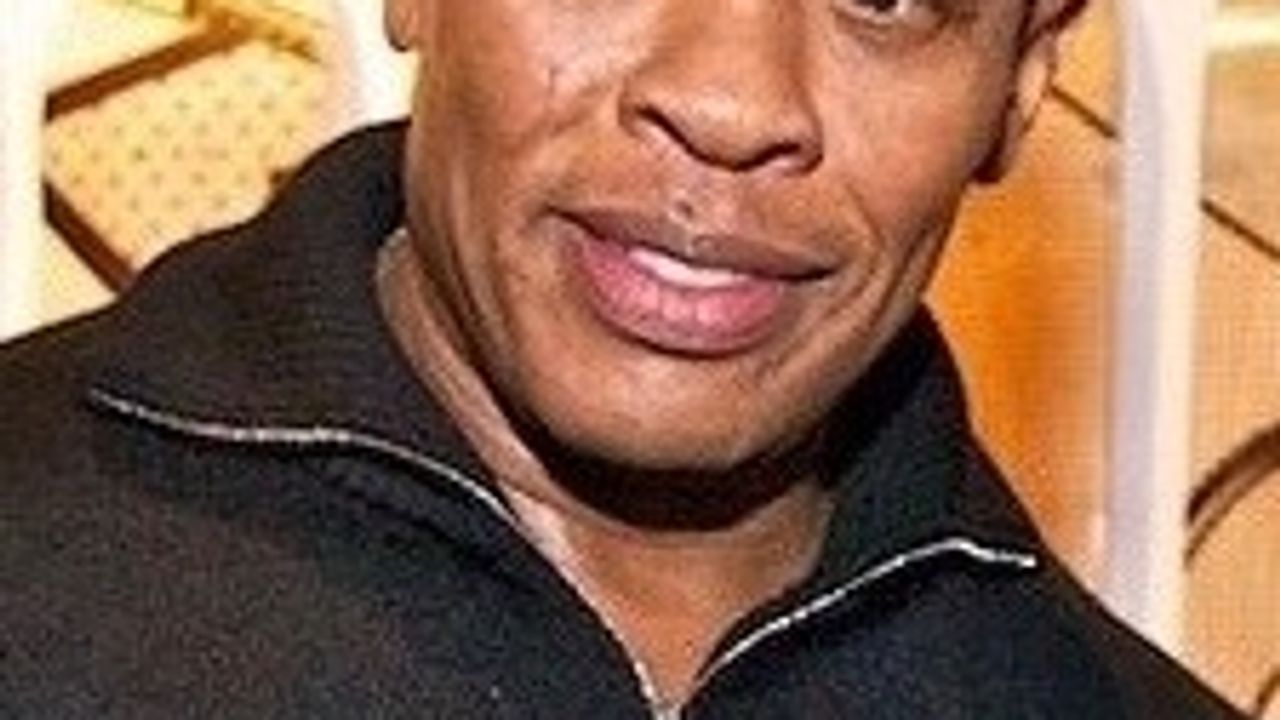
Dr. Dre
Photo: Commondr3ads / Beats Store opening, Wikimedia Commons (Nov 2011) / CC BY-SA 3.0

Why This Person Is Included
The Apple acquisition headline is well-known. Less examined is how Young and Jimmy Iovine structured Beats Electronics through two rounds of institutional investment — a $300M HTC partnership in 2011 and a $501M Carlyle Group transaction in 2013 — while maintaining the founder equity positions that made the $3.2 billion Apple exit transformative. HTC’s eventual exit, driven by the company’s own declining smartphone business, effectively cleared the cap table ahead of the Apple deal. The specifics of how the partnership agreements were structured to allow that outcome are the part of the Beats story rarely told.
The Story
Young's foundational business insight is that cultural credibility — the authority of a producer who has spent decades deciding what music should sound like — can authenticate a consumer product better than institutional engineering credentials.1 Beats Electronics was not built on acoustic engineering specifications. It was built on the argument that Young's ears were trustworthy.
Beats Electronics, co-founded with Jimmy Iovine in 2006, launched its first headphones in 2008 targeting a mainstream music consumer rather than audiophiles.1 Despite early criticism from audio engineers who noted the bass-heavy sound profile, Beats captured the premium consumer headphone market through retail placement, cultural endorsement, and the argument that sound designed for music listeners was intentional.
Apple Acquisition ($3.2 Billion, 2014)
In May 2014, Apple acquired Beats Electronics — including both the hardware business and Beats Music streaming service — for approximately $3.2 billion.2 At the time, this was the largest acquisition in Apple’s history.2 The streaming service was subsequently relaunched as Apple Music. Young’s reported after-tax proceeds from the acquisition were approximately $500 million, placing him among the highest-earning Black entertainers in American history.
Aftermath Entertainment, Young's record label founded within Interscope Records in 1996,1 continues to operate under Universal Music Group. Its artist development record — Eminem, Kendrick Lamar, 50 Cent — represents three decades of talent identification generating significant revenue for Universal. Young holds the title of Chairman of Aftermath.
Constraints & Tradeoffs
The Consumer Hardware Credibility Problem
When Beats Electronics launched its first headphone in 2008, the consumer electronics market was defined by Sony, Bose, Sennheiser, and AKG — companies with decades of acoustic engineering credibility. Young and Jimmy Iovine were proposing a premium headphone from a record producer and a music executive. The market's default response was skepticism: audio engineers criticized the sound profile as bass-heavy and optimized for mass appeal rather than accuracy; audiophiles dismissed it as a celebrity product.
The constraint was not the product — the product was deliberately designed to appeal to music fans rather than audio engineers — it was convincing the premium consumer market that a music producer's hearing was a credible basis for headphone design. Young and Iovine addressed this not by defending against the audiophile criticism but by targeting the mainstream music consumer directly through retail placement, cultural endorsement, and the argument that the sound profile they chose was intentional.
What Actually Happened
$3.2 Billion Exit, Then After
Apple acquired Beats Electronics in May 2014 for approximately $3.2 billion — at the time the largest acquisition in Apple's history. The acquisition included both the hardware business and Beats Music, the streaming service that Apple subsequently relaunched as Apple Music. Young's reported stake produced a return in the hundreds of millions of dollars.
Aftermath Entertainment, the record label Young founded within Interscope Records in 1996, continues to operate under Universal Music Group. Its artist development record — Eminem, Kendrick Lamar, 50 Cent, and others — represents a consistent talent identification capability that has generated significant revenue for Universal over three decades. Young holds the title of Chairman of Aftermath while his recording and production activities have reduced.
Pattern Extraction
Young's pattern is cultural credibility as product authentication: the reason Beats headphones could command a premium in 2008 was not technical specification — it was the credibility of a producer who had spent decades deciding what music should sound like. The product was backed by a credential the competitors did not have: sonic authority built inside the music industry, not inside the audio engineering industry.
Frequently Asked Questions
- What was Andre Young's highest level of education? ▾
- Young attended Fremont High School in Los Angeles but did not graduate, leaving to pursue his music career. No post-secondary degree is on record.
- What is Dr. Dre's net worth? ▾
- Young’s reported after-tax proceeds from the 2014 Apple acquisition of Beats Electronics were approximately $500 million (CNET, May 2014). No independently verified current net worth figure is publicly available for Andre Young.
- How much did Apple pay to acquire Beats Electronics? ▾
- Apple acquired Beats Electronics — including both the Beats headphone hardware business and the Beats Music streaming service — for approximately $3.2 billion in May 2014. At the time, it was the largest acquisition in Apple’s history. (Source: Apple Inc. press release, May 28, 2014.)
- Who co-founded Beats Electronics with Dr. Dre? ▾
- Beats Electronics was co-founded by Andre Young (Dr. Dre) and Jimmy Iovine in 2006. Iovine, a longtime music executive, provided industry relationships and business structure while Young supplied the sonic credibility and cultural authority behind the product.
- How many subscribers did Beats Music have when Apple acquired it? ▾
- Beats Music had approximately 250,000 subscribers at the time of Apple’s acquisition in May 2014 — roughly three months after the service’s public launch on January 21, 2014. Apple paid $3.2 billion for a service at that subscriber count because the number demonstrated the thesis was working, not because it represented a scaled business. (Source: TechCrunch, May 2014.)