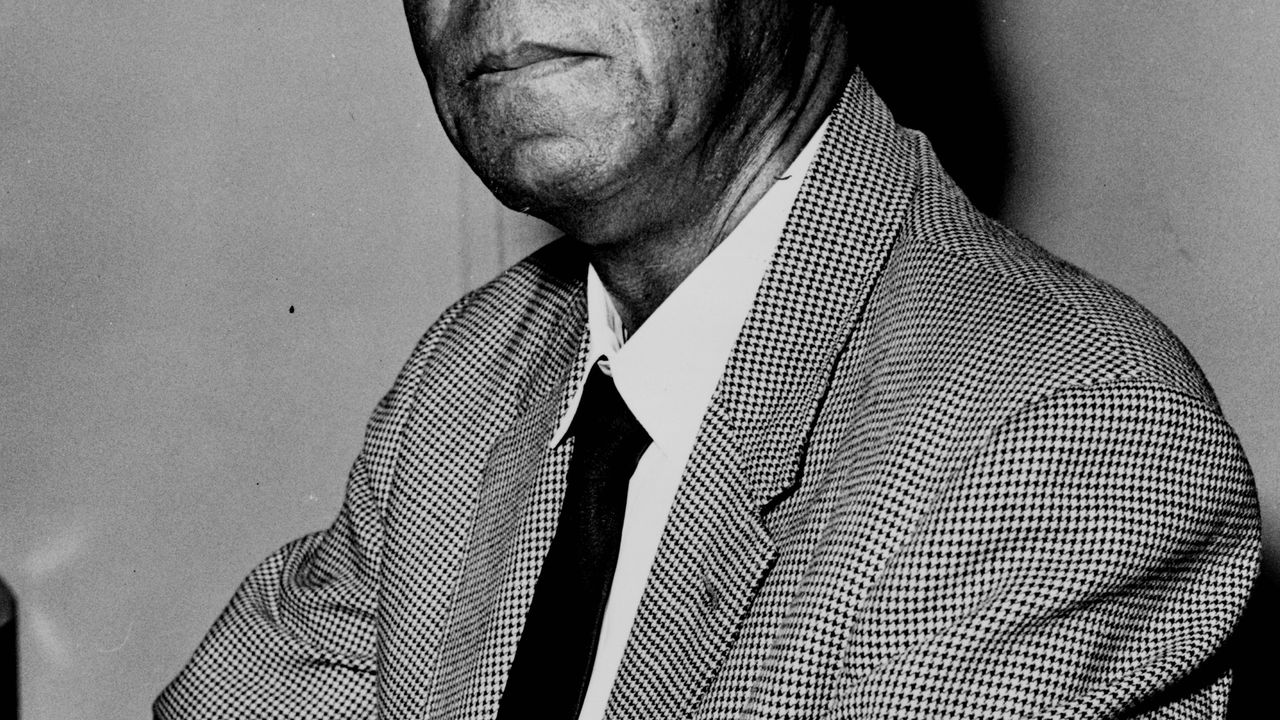
Asa Philip Randolph
Labor organizer, civil rights leader, and founder of the Brotherhood of Sleeping Car Porters

Why This Person Is Included
Asa Philip Randolph organized the Brotherhood of Sleeping Car Porters, spent twelve years fighting the Pullman Company, and won in 1937 — securing wages, shorter hours, and union recognition for the men who served white passengers on the nation's railroads. He later organized the March on Washington Movement that pressured FDR to desegregate the defense industry (1941), and he was the principal organizer of the 1963 March on Washington where King delivered his 'I Have a Dream' speech. He is sometimes remembered as a civil rights footnote. He is more accurately described as the architect of the infrastructure that made the movement possible.
Historical Significance
Randolph's achievement with the Porters established the financial and organizational foundation for the civil rights movement. The Brotherhood's membership dues funded NAACP chapters, supported families of civil rights activists, and created a national network of Black men with economic stability and organizational discipline. The Pullman Porters were not just a union — they were a pipeline for literature, politics, and movement infrastructure across the country, carrying copies of the Chicago Defender and organizing meetings in the cities they served.
The Story
Asa Philip Randolph was born in Crescent City, Florida, in 1889, and moved to Harlem as a young man where he became a socialist organizer and editor. His early career was in journalism and labor politics — publishing The Messenger, a radical Black newspaper — before he identified the Pullman Porter workforce as the organizing target that could change the structural position of Black labor in America.
The Pullman Company was, for decades, the largest single employer of Black men in the United States. Pullman Porters worked overnight shifts serving white passengers on sleeping cars, performing a labor of hospitality and invisibility that the company compensated below white workers in equivalent roles. The Porters knew their value. They had been organizing informally for years before Randolph arrived.
Twelve Years to a Contract (1925–1937)
Randolph founded the Brotherhood of Sleeping Car Porters in 1925. The Pullman Company fought the union for twelve years — firing organizers, threatening members, and using its enormous economic leverage over Black communities. The Brotherhood survived through the Depression, secured formal recognition under the National Labor Relations Act in 1935, and won its collective bargaining agreement from the Pullman Company in 1937. The agreement included wage increases, reduced hours, and union recognition — the first major collective bargaining victory for a predominantly Black union.
The Brotherhood's victory had consequences beyond wages. The Pullman Porters became a major channel for the Great Migration's cultural infrastructure — carrying copies of the Chicago Defender into the South, connecting Black communities in different cities, and building the organizational discipline that movement work required. Otis Gates, in this curriculum, is the son of a Pullman Porter. That biographical detail is not incidental: it is a data point about the class formation that Randolph's union made possible.
Randolph continued organizing after 1937. He pressured FDR to issue Executive Order 8802 (1941), desegregating the defense industry — the first federal executive order on civil rights since Reconstruction. He organized the 1963 March on Washington. He died in 1979 at 90, having spent six decades building the infrastructure that the movement depended on and that the movement's mythology sometimes forgot to credit.
Constraints & Tradeoffs
Randolph organized the Brotherhood of Sleeping Car Porters against the Pullman Company — at the time one of the largest employers of Black men in the United States and a company with enormous economic leverage over Black communities that depended on Pullman employment. The Pullman Company fought the union for twelve years: firing organizers, bribing porters to inform on organizing activities, and using its influence over Black-oriented media to run anti-union coverage. The constraint was that the workers Randolph was organizing depended on Pullman for income, making the personal cost of union participation very high for individuals even when the collective benefit was clear.
What Actually Happened
The Brotherhood of Sleeping Car Porters won its collective bargaining agreement from the Pullman Company in 1937 — twelve years after Randolph founded the organization. The agreement included wage increases and shorter hours. Randolph went on to organize the March on Washington Movement that pressured FDR to issue Executive Order 8802 (1941) desegregating the defense industry. He was a principal organizer of the 1963 March on Washington. He died in 1979 at ninety.
Pattern Extraction
Randolph's pattern is the twelve-year campaign: identify the leverage point (Pullman employment was the largest Black employment source), build the organizing infrastructure around workers whose economic dependence on the employer makes individual participation costly, sustain the organization through a decade of employer suppression, and win through sustained collective action rather than a single confrontation.
Frequently Asked Questions
- What was Asa Philip Randolph's highest level of education? ▾
- Randolph attended the City College of New York, where he studied history, philosophy, and literature, but did not complete a formal degree. His education was largely self-directed through wide reading and his work as a journalist and editor of The Messenger, a socialist newspaper he co-founded in Harlem.
- What was Asa Philip Randolph's net worth? ▾
- No independently verified net worth figure is publicly available for Asa Philip Randolph. He was a labor organizer and civil rights leader who spent his career in service work; he is not recorded as having accumulated significant personal wealth. He died in 1979.
- When did Randolph found the Brotherhood of Sleeping Car Porters, and when did it win recognition? ▾
- Randolph founded the Brotherhood of Sleeping Car Porters in 1925. The Pullman Company fought the union for twelve years, firing organizers and using its economic leverage over Black communities. The Brotherhood won formal recognition under the National Labor Relations Act in 1935 and secured its collective bargaining agreement from the Pullman Company in 1937, the first major collective bargaining victory for a predominantly Black union.
- What role did Randolph play in Executive Order 8802? ▾
- Randolph organized the March on Washington Movement in 1941, threatening to bring tens of thousands of Black Americans to Washington, D.C., to demand equal access to defense industry jobs. Facing that pressure, President Franklin D. Roosevelt issued Executive Order 8802 on June 25, 1941, prohibiting racial discrimination in the defense industry and federal agencies. Randolph then called off the planned march.
- What was Randolph's role in the 1963 March on Washington? ▾
- Randolph was the principal organizer of the 1963 March on Washington for Jobs and Freedom, at which Dr. Martin Luther King Jr. delivered his 'I Have a Dream' speech. The march drew an estimated 250,000 people and remains one of the largest political demonstrations in American history. Randolph had first conceived of a mass march on Washington more than two decades earlier, in 1941.