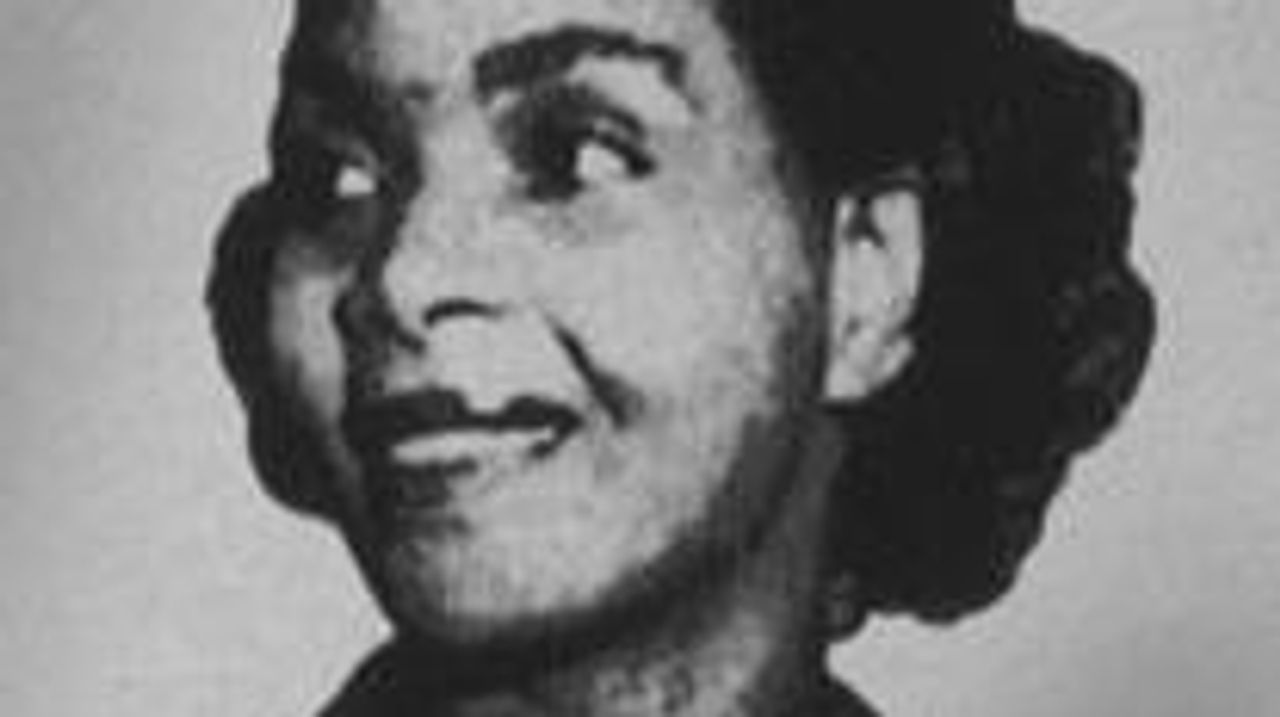
Irene Morgan Kirkaldy
Photo: Unknown / Wikipedia / Maryland State Archives / Press / editorial use

Why This Person Is Included
Irene Morgan Kirkaldy won a 7-1 Supreme Court decision desegregating interstate bus travel in 1946 — Morgan v. Virginia — nine years before Rosa Parks and seventeen years before the Civil Rights Act. Thurgood Marshall argued her case. The ruling was routinely ignored by Southern states. Morgan herself returned to private life, raised her children, and was not celebrated publicly until she was in her eighties. The victory was real. The implementation failed. Both facts are the curriculum.
The Story
Irene Morgan was born on April 9, 1917, in Baltimore, Maryland.1 On July 16, 1944, she was traveling on a Greyhound bus from Gloucester County, Virginia, to Baltimore when she was ordered to give up her seat to a white passenger under Virginia's bus segregation law.1 She refused. When a deputy sheriff boarded the bus with a warrant for her arrest, she tore it up and threw it out the window — then physically resisted removal, kicking one deputy and clawing another.1
Morgan paid her fine for assaulting the sheriff but refused to pay the fine for violating the segregation law. The NAACP took her case. Thurgood Marshall — who would later argue Brown v. Board of Education and become the first Black Supreme Court Justice — argued Morgan v. Virginia before the Supreme Court.2 On June 3, 1946, the Court ruled 7-1 that Virginia's law requiring segregated seating on interstate buses was an unconstitutional burden on interstate commerce.2
The Gap Between Law and Practice
The ruling was routinely defied by Southern states and bus companies. CORE organized the Journey of Reconciliation in 1947 to test compliance — riders were arrested in North Carolina.1 Effective enforcement did not come until the 1960 Boynton v. Virginia ruling and the 1961 Freedom Rides.1 Morgan returned to private life, raised her children, and earned her bachelor's degree at age 68 and her master's at age 73.1 She was awarded the Presidential Citizens Medal by Bill Clinton in 2001.1 She died on August 10, 2007, at ninety.1
Constraints & Tradeoffs
Morgan's refusal on July 16, 1944 — and the Supreme Court case that followed — succeeded legally while failing practically. The Virginia ruling desegregated interstate bus seating in 1946, and states and bus companies simply continued the illegal practice. Morgan v. Virginia established the legal right without the enforcement mechanism to protect it. The implementation required a second generation of activists (the 1961 Freedom Riders) who were willing to face violence to force compliance with a ruling that existed on paper but not in practice.
The gap between legal victory and practical implementation is the constraint that Morgan's story names directly. The court can rule in your favor. The sheriff can still refuse to comply. The bus company can still enforce segregation. Converting a legal precedent into operational reality requires enforcement capacity that the precedent itself does not provide.
What Actually Happened
The Ruling Was Ignored; Then Enforced Anyway
The 1946 Morgan v. Virginia ruling was largely ignored by Southern states and bus companies for years. In 1947, CORE organized the Journey of Reconciliation — an interracial group of riders testing compliance with the Morgan ruling in the South. They were arrested in North Carolina. Effective enforcement of Morgan did not occur until the 1960 Boynton v. Virginia ruling (which extended desegregation to bus terminal facilities) and the 1961 Freedom Rides, which generated enough national attention to force federal enforcement.
Morgan herself returned to private life in Gloucester County, Virginia, raised her children, completed a college degree at the University of Maryland in the 1960s, and lived in obscurity until historians began documenting her case in the late 1990s. She was awarded the Presidential Citizens Medal by Bill Clinton in 2001. She died on August 10, 2007, at ninety. Her Supreme Court victory was real. The implementation required another generation.
Pattern Extraction
Morgan's pattern is the legal precedent without the enforcement: establish the right through the court system, then accept that establishing the right is not the same as enforcing it. The right and the enforcement are two separate campaigns requiring different tactics, different timelines, and different actors. Morgan provided the right; the Freedom Riders provided the enforcement fifteen years later.
Frequently Asked Questions
- What was Irene Morgan Kirkaldy's highest level of education? ▾
- Irene Morgan Kirkaldy earned a bachelor's degree at age 68 and a master's degree at age 73, completing both later in life after her civil rights case and family years.
- What is Irene Morgan Kirkaldy's net worth? ▾
- No independently verified net worth figure is publicly available for Irene Morgan Kirkaldy.
- What was the legal basis for Morgan v. Virginia (1946)? ▾
- The NAACP argued Morgan v. Virginia on Commerce Clause grounds — that Virginia's bus segregation law imposed an unconstitutional burden on interstate commerce — rather than on the Equal Protection Clause of the Fourteenth Amendment. The strategy deliberately avoided the Equal Protection route because Plessy v. Ferguson (1896) was still binding precedent and the Court was not prepared to overturn it in 1946.
- Who argued Morgan v. Virginia before the Supreme Court? ▾
- Thurgood Marshall and William H. Hastie of the NAACP argued the case before the Supreme Court. The effort began with Spottswood W. Robinson III, who initially took Morgan's case before the NAACP brought Marshall and Hastie in for the Supreme Court appeal.
- If Morgan v. Virginia desegregated interstate buses in 1946, why were buses still segregated into the 1960s? ▾
- The 7-1 ruling had no enforcement mechanism, and Southern states and bus companies simply ignored it. Compliance was not tested until CORE's Journey of Reconciliation in 1947, which resulted in arrests in North Carolina. Effective federal enforcement did not come until Boynton v. Virginia (1960) and the 1961 Freedom Rides.