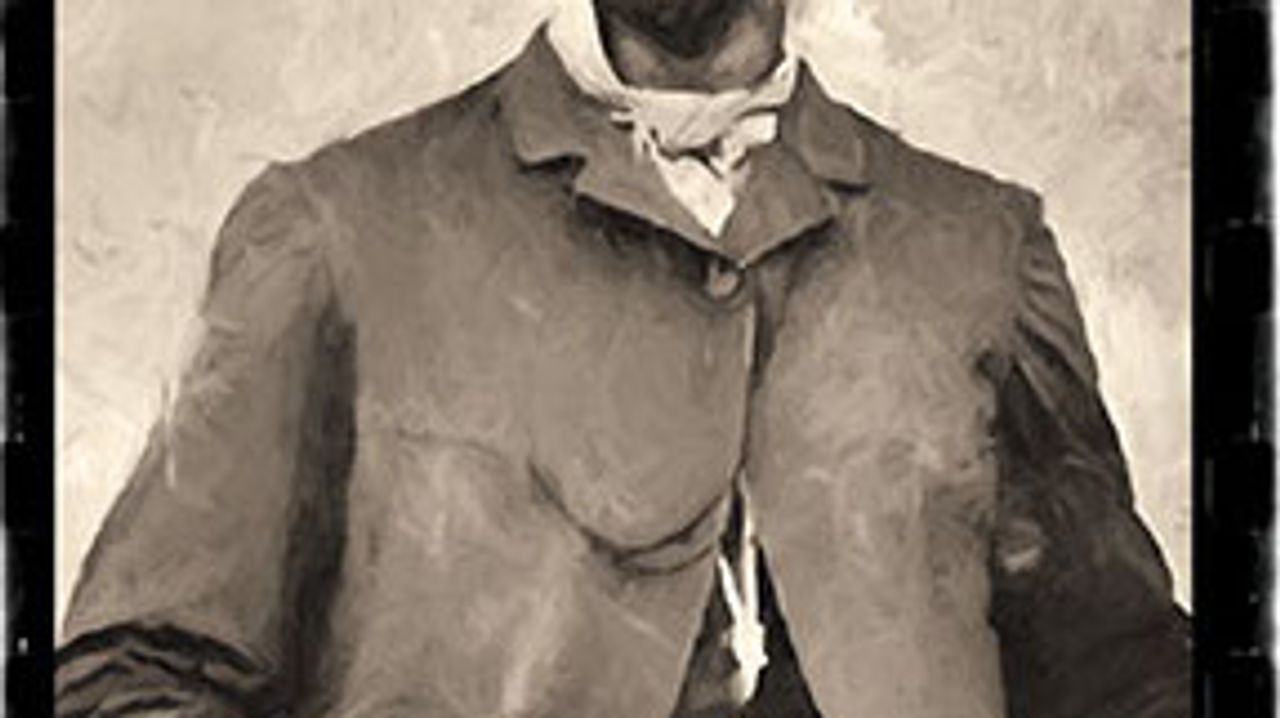
Thomas L. Jennings
Tailor, inventor, and the first Black American to receive a United States patent

Why This Person Is Included
He held the first United States patent ever granted to a Black American. His invention — a dry cleaning process he called dry scouring — is the direct ancestor of the modern dry cleaning industry. He used his patent income to purchase his family's freedom and fund abolitionist causes. His daughter Elizabeth refused to give up a seat on a New York City streetcar in 1854, won a lawsuit against the transit company in 1859, and ended segregation on New York City's public streetcars. Chester A. Arthur was her attorney. Rosa Parks was born 61 years after Elizabeth Jennings won. Thomas Jennings does not appear in the standard account of either story.
Historical Significance
Jennings demonstrated in 1821 that the patent system — designed to protect intellectual property — could be accessed by a Black man because he was legally a free citizen. The patent recognized his citizenship before the law formally recognized it for most Black Americans. He turned that recognition into capital, and turned that capital into freedom for his family and funding for abolition.
The Story
Thomas L. Jennings was born free on January 1, 1791, in New York City. He trained as a tailor and built what became a large and successful clothing store in Lower Manhattan. His customers brought him their best garments to clean, and the cleaning methods available in 1820 frequently ruined fabrics. He started experimenting.
On March 3, 1821, Jennings was granted U.S. Patent No. 3,306 for a process he called 'dry scouring' — a method for cleaning clothes without water, using solvents that preserved delicate fabrics while removing stains. It was the direct precursor to modern dry cleaning. He was the first Black American to receive a United States patent.
The patent certificate described him as a citizen of the United States. In 1821, this designation was not routine for Black Americans — it was contested, uncertain, and in many states legally nonexistent. The patent system, by recognizing his citizenship, acknowledged something that the political system refused to. Jennings understood exactly what that meant.
What He Did With It
The first money Jennings earned from his dry scouring patent went to the legal fees required to purchase his family out of slavery and to fund abolitionist causes. He later supported Freedom's Journal, the first Black-owned newspaper in the United States, and the Abyssinian Baptist Church in Harlem.
The original patent document no longer exists. It is among approximately 10,000 patents destroyed in an 1836 fire at a hotel in Washington, D.C., where the documents were being temporarily stored. Jennings' patent is documented in surviving records but the original is gone.
His Daughter's Victory
In 1854, Jennings' daughter Elizabeth was forcibly removed from a New York City streetcar after refusing to leave a car designated for white passengers. Her father organized her legal defense. The case went to court in 1855. In 1859, a judge ruled in Elizabeth Jennings' favor, ordering the transit company to desegregate its cars. Her attorney was Chester A. Arthur, who would later become the 21st President of the United States. The ruling ended segregation on New York City's streetcars.
Thomas Jennings died on February 12, 1856 — before he could see the ruling that vindicated his daughter's stand. He had spent 35 years turning a patent into freedom and a lawsuit into a precedent. Neither story is commonly told with his name in it.